Word Search KDP Puzzle Book Review — a clear, honest look at what it is, who it helps, real pros & cons, and whether it’s worth buying today.
This review breaks down what the Word Search KDP Puzzle Book is, who benefits from it, real pros and cons, and whether it’s a smart buy for creators and side-income seekers.
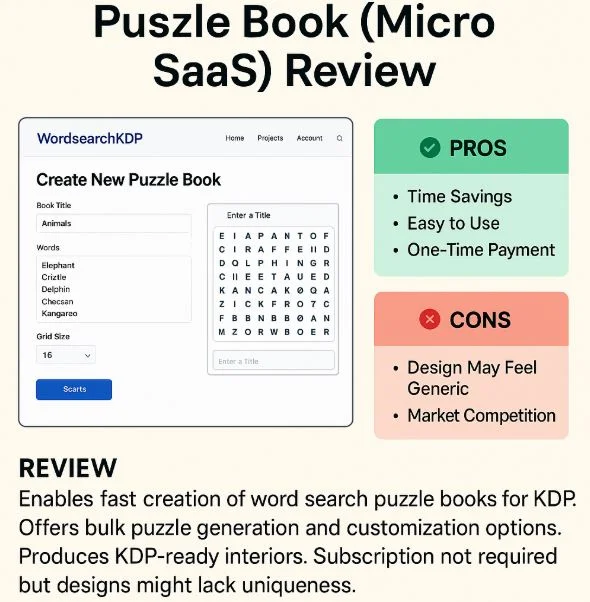
Key Highlights
- Fast setup: Create printable puzzles you can publish on KDP.
- Low technical skill: Templates and ready-made word lists.
- Passive potential: One-time creation, ongoing sales.
- Multiple niches: Kid puzzles, themed bundles, language practice.
- Costs: Low entry cost — mostly time, some optional tools.
Word Search KDP Puzzle Book Review — First Impressions
My first read of the Word Search KDP Puzzle Book shows a product designed for creators who want to publish low-cost, printable books on platforms like KDP. It bundles templates, word lists, and often a guide to formatting and uploading. If you’re someone who likes systems — create once, publish many — this is the sort of product that speeds that path up.
It’s not a magic money button. Expect to put in time for niche research, layout, and marketing. But for people who enjoy puzzle design, teaching, or packing collections for niche audiences (e.g., dog lovers, travel cities, holiday themes), it’s a tidy toolkit that removes repetitive work.
Who Created Word Search KDP Puzzle Book and Why It Exists
The package is typically produced by creators with background in low-content publishing, digital product creation, or self-publishing coaching. The reason behind products like this is straightforward: they solve the mechanics of repetitive design, formatting, and small technical hurdles for people who want to publish puzzle books quickly.
Creators often pitch it to hobbyists, teachers, and side-income entrepreneurs. The goal is to make the publishing process less intimidating so users spend more time on niche research and marketing — which is the real driver of sales for small printable books.
What Word Search KDP Puzzle Book Actually Does for You
In plain terms: it provides the raw assets and step-by-step instructions needed to create a finished word search puzzle book that you can upload to platforms like Kindle Direct Publishing. That usually includes pre-formatted pages, editable source files, word lists across themes, and a short walkthrough for cover and interior upload.
For many buyers, that means they avoid needing specialized software, mastering grid creation, or spending hours building word lists from scratch. Instead you can tweak templates, add your own voice or themes, then publish.
How It Works (Step-by-Step Overview)
Step 1 — Choose your niche and templates. The package gives you themed word lists (e.g., animals, travel, holidays) and ready-made interiors. Pick a theme that has demand but isn’t oversaturated.
Step 2 — Edit and brand. Open the template files (usually PDF, DOCX, or editable source) and replace, reorder, or add puzzles. Add a simple intro and a table of contents if desired.
Step 3 — Create a cover and upload. Use the included cover template or design your own, then follow the platform’s upload steps. Many sellers bundle multiple small books into a series for better visibility.
Realistic Benefits You Can Expect
Low entry barrier: If you can edit a document and upload a file, you can make a word search book. That accessibility is the clearest advantage — no deep design or programming skills required.
Speed to market: Templates cut the time massively. Where building puzzles manually could take hours per page, templates let you assemble a finished interior in a fraction of that time.
Repeatability: Once you have a system, you can repurpose the same templates into multiple themed books, increasing your product catalog without reinventing the wheel each time.
Potential Drawbacks and Limitations
Quality varies: Not every template is created equal. Some are generic and need work to avoid looking amateur. You may need to refine type, spacing, and alignment to meet platform standards.
Competition and discoverability: Low-content niches attract many sellers. Sales aren’t guaranteed; you’ll likely need modest marketing or smart niche choices to get consistent purchases.
Originality concerns: Using the same widely-sold templates as dozens of others can make differentiation tough. Adding your own themes, better covers, and cohesive marketing is essential.
Pricing, What You Get, and Today’s Deal
Pricing is often offered at a low one-time cost with upsells for done-for-you bundles, graphical covers, or private label rights. What you should expect to get in a typical package:
- Editable interiors (word-search grids, answers)
- Multiple themed word lists
- Cover templates and upload instructions
- Short guide to pricing and keywords
If you follow the call-to-action on this page, you’ll be taken to an offer that may include limited-time bonuses. Always check the exact contents before purchase — and confirm refund policy if unsure.
Bonuses You Get Through This Page
Common bonuses from affiliate offers include additional cover packs, extra themed word lists, and short video walkthroughs for uploading. These make the initial steps easier and can save time if you’re brand-new to publishing.
Remember: bonuses are time-limited and tied to the specific purchase link. If a bonus looks useful, weigh it against whether you’ll actually use the extra materials — they’re only valuable if they reduce your workload.
Refund Policy and Safety Net
Most sellers offer a refund window (commonly 30 days) but terms vary. Read the vendor’s refund policy closely: some require a support ticket; others may charge a processing fee. Keep a screenshot of the purchase confirmation to speed up any claims.
Tip: If you’re unsure, try one small project with the templates. If you can complete and list a book within the refund window, you’ll know quickly whether the workflow suits you.
Pros & Cons Summary
Pros
- Quick setup using templates
- Low upfront cost
- Good for repetitive passive income workflows
- Works for a wide range of niches
Cons
- Competition in popular niches
- Template quality varies
- Requires effort to make listings sell
- Some upsells can be unnecessary
Who Should Buy Word Search KDP Puzzle Book (and Who Should Skip It)
Buy it if you: enjoy creating low-content books, want a step-by-step process to publish quickly, or are a teacher/entrepreneur looking to build small passive income streams. It’s ideal for people who like systems and iterative publishing.
Skip it if you: expect overnight riches with no effort, dislike basic design work, or can’t commit a few hours to learn the upload and listing process. It’s a tool — useful when paired with some effort and strategic niche choices.
Final Verdict & Next Step
The Word Search KDP Puzzle Book is a practical toolkit for creators who want to publish puzzle books with less friction. It won’t replace marketing, niche research, or effort — but it removes several technical barriers that slow down beginners.
If you’re ready to commit to creating and listing products, this kind of package can be a helpful accelerator. Use it to prototype a few small books, learn the process, then scale the themes that sell best.
Final Conclusion
You’ve made it all the way here — and that tells me something powerful: you’re serious about changing your results. This isn’t just another review of Word Search KDP Puzzle Book … it’s your final checkpoint before unlocking something that could genuinely shift the way you move forward. 💡 Here’s the truth: The people who act now always win. Those who hesitate, watch others celebrate. The clock is ticking — and every second you wait is another opportunity slipping away.